
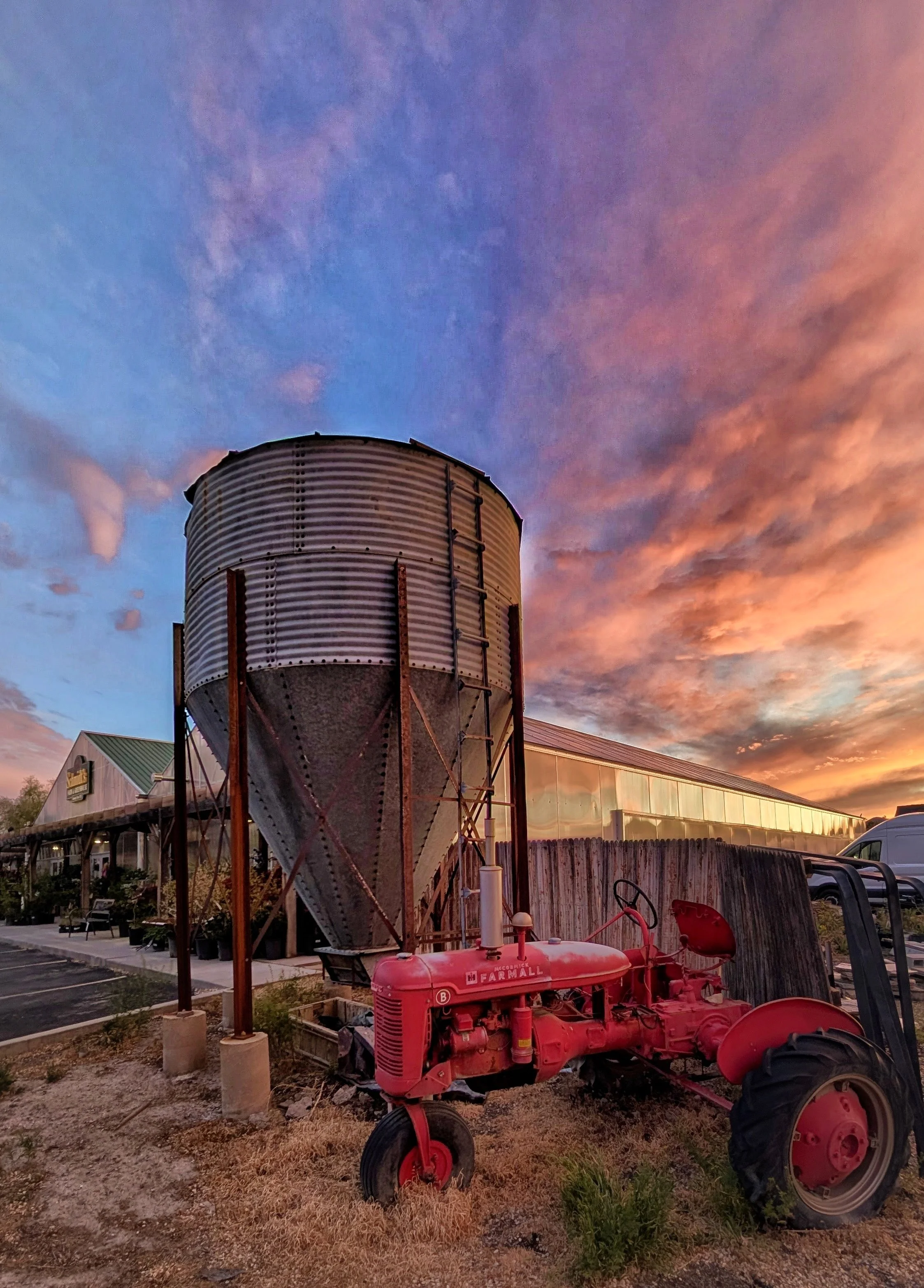
Schmidt's Farm and Greenhouse
A West Jordan Family Legacy
Sunset over the Silo
“I used to lie down under the trees and listen to the birds and the mourning doves coo. When I am in the fields now, at home, and hear the mourning doves, it takes me back to my childhood days in the old country.”
– John J. F. Schmidt
The First Generation Breaks Ground — John Schmidt
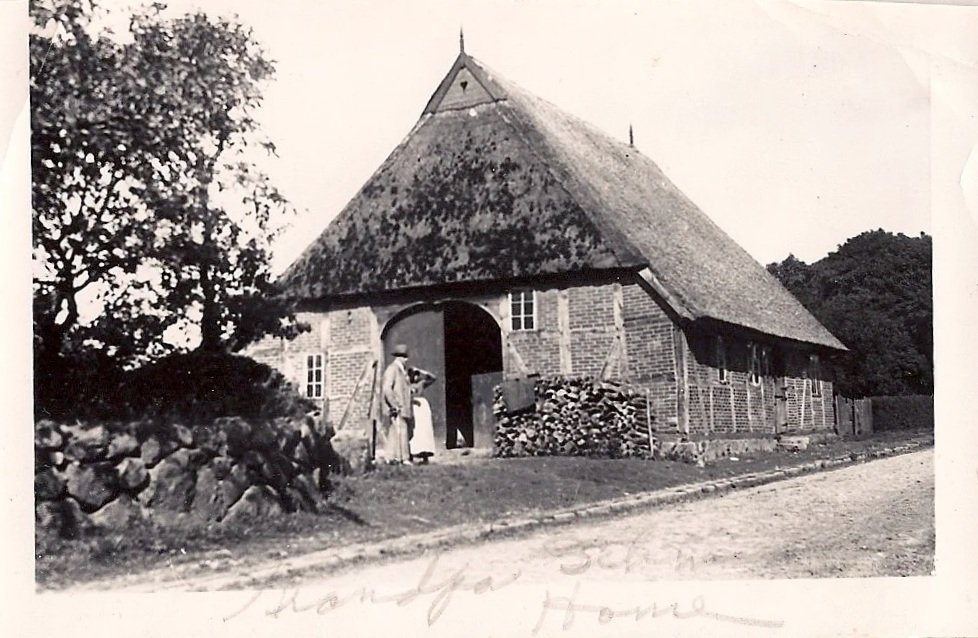
John Schmidt’s Childhood Home In Taluk, Germany
On a cold October morning in 1867, John J. F. Schmidt was born in Taluk, Germany. One of five children, he learned the value of hard work at a young age. During his elementary school years, he spent summers herding a neighbor's cows. "The cows in the forest kept me busy keeping them together and not losing them among the trees," he later recalled (J. J. F. Schmidt, 1935).
John finished school at 15 and was hired out to tend cows and horses, moving to the village of Schreststaken for the next 18 months. Mornings began cold and early, long before the sun came up. Work began at 3:30 AM in the summer and 5:00 AM in the winter. His salary for the entire year, in American money, was merely $33.75, plus food and board.
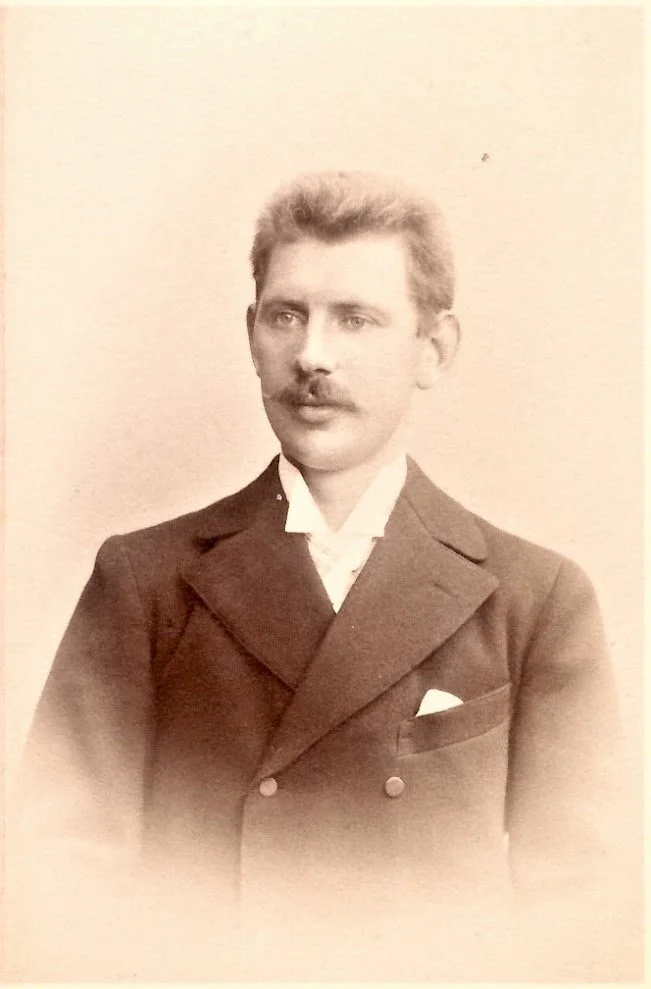
John at age 20
After various jobs in livestock, 18-year-old John went to work at a mill, hauling grain to the mill and flour back to the farmers. "As I write this at 68 years of age, I can still feel the effects of lifting those heavy sacks of grain," he relates (J. J. F. Schmidt, 1935). Each sack weighed 200 pounds.
The stars shone bright on the cold, frosty night John was baptized in the frigid waters of a transportation canal. At 25, he joined The Church of Jesus Christ of Latter-day Saints — "the turning point [in his] life," he would later say (J. J. F. Schmidt, 1935). Over time, he developed a lifelong conviction and a deep faith in Jesus Christ.
Marie Henrietta Bull at age 24.
John met a young woman named Marie Bull at his new church in Hamburg, Germany. Like John, Marie was no stranger to hard work: raised alongside her twin sister and older brother by their widowed mother, taught to be thrifty, and — like John — sent out at 15 to work as a nanny (M. B. Schmidt, n.d.).
Having decided to get married, John and Marie Bull left everything in May of 1897 as they braved the Atlantic, traversed the plains, and gathered with the Saints in Salt Lake City, Utah. Marie's twin sister and mother came too, but they left behind many family members and friends for a foreign land, language, and culture that would become home for the rest of their lives. Despite the change, they were excited to be here as they joined with other members of their faith.

Furnessia, the ship on which John and Marie crossed the Atlantic.
They married six months after leaving Germany. Moving into a small fixer-upper, they made a living with Marie taking in housework and laundry while John worked odd jobs, eventually settling into cement contracting. However, despite having no prior farming experience, John and Marie wanted to raise their six children on a farm where they could instill in them many of the lessons of hard work they had learned back in Germany.
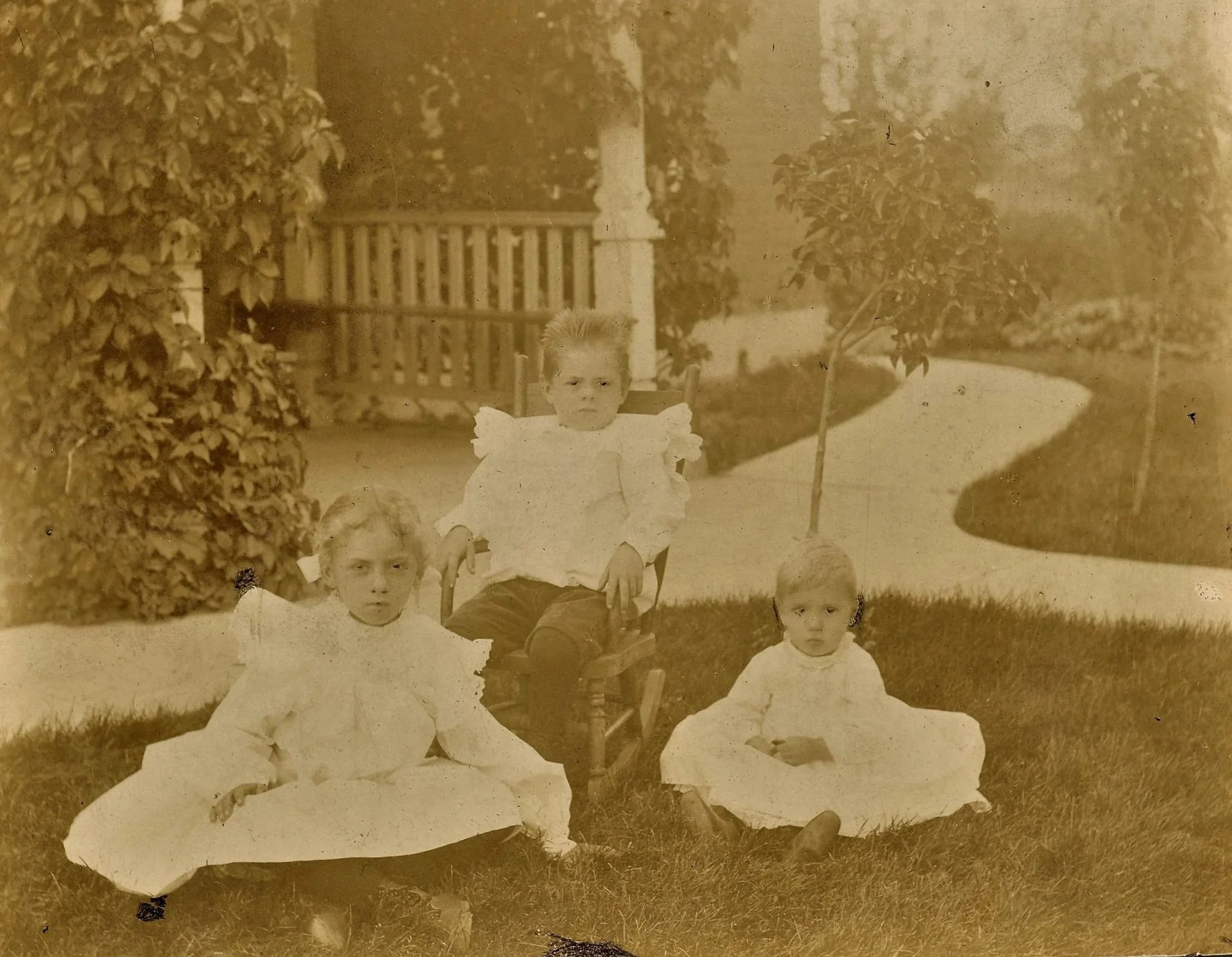
John and Marie's first three children: Emma, Charles, and Joseph Schmidt.
After years of hard work and careful saving, they purchased 60 acres in West Jordan in 1909. John spent two years building a house on it and moved his family there in 1911, the day before Thanksgiving. The house still stands today on Redwood Road next to the current Schmidt's Greenhouses.

John Schmidt constructed this house between 1909–1911; it still stands on Redwood Road today.
John and his five boys worked the land year after year with the limited machinery of the time, taking cement jobs on the side to supplement what the farm provided. As the children grew, so did their farming expertise, and slowly, success followed.
John had done the hardest part — he'd turned raw acreage into a working farm and a family who knew how to run it. But the farm's future didn't rest on John alone. Among his five boys, one carried a particular gift that would shape the next chapter.
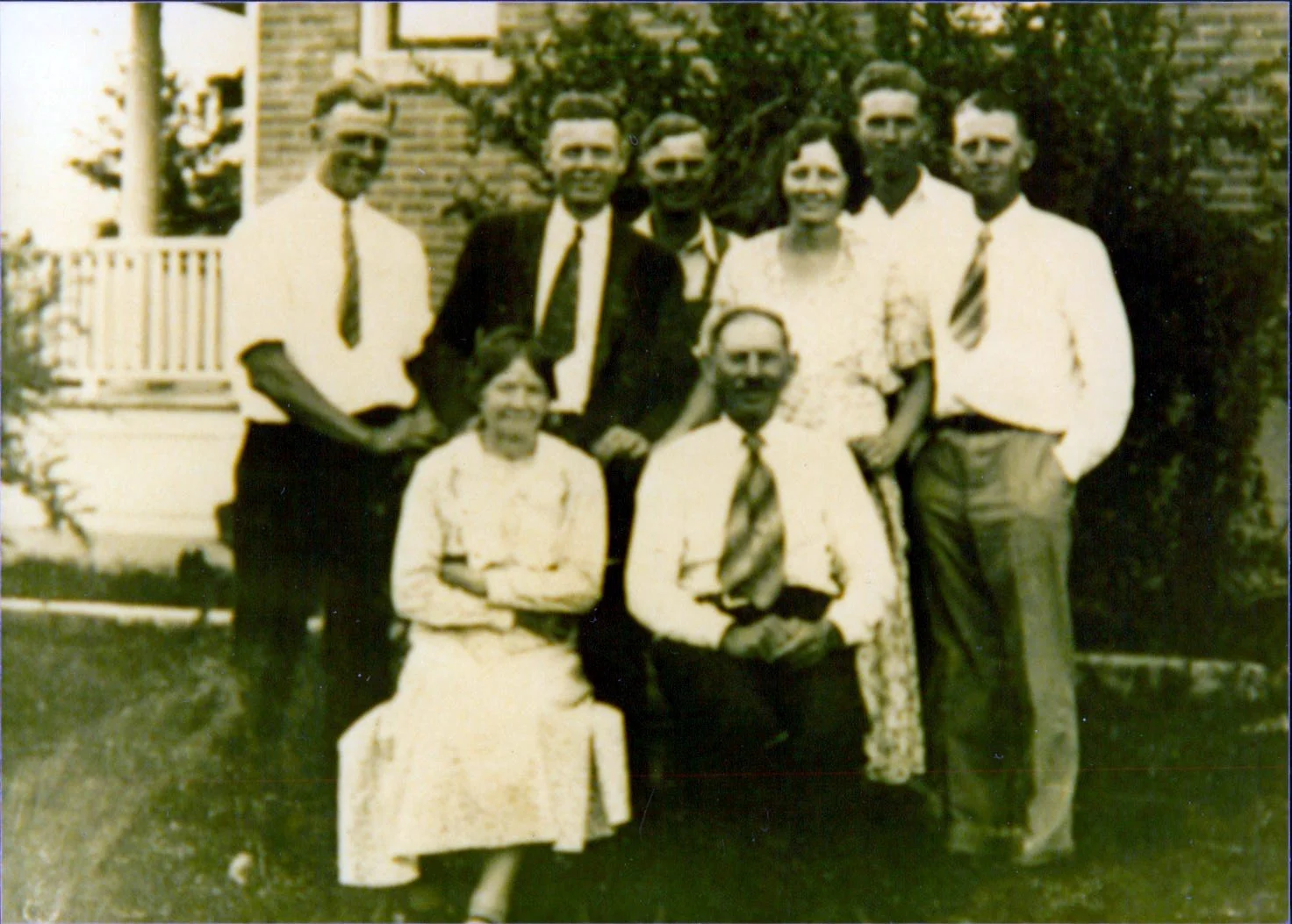
John and Marie Schmidt with their six adult children in front of their house.
A Second Generation Takes Root — Henry Schmidt
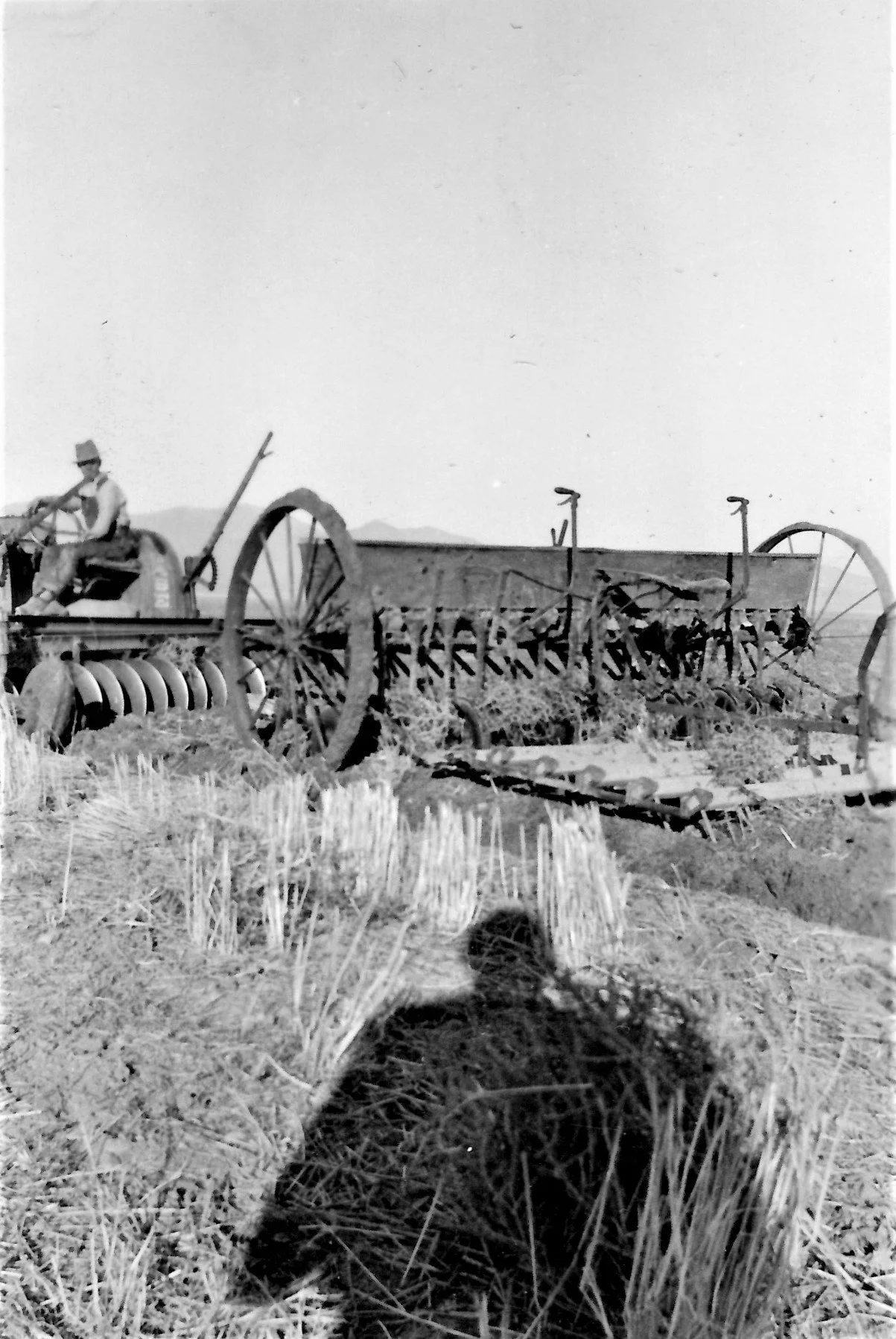
Henry riding a tractor, discing and planting grain, saving hours of manual labor.
Henry Schmidt was the family's inventor. "He was known for his ingenuity and creative mind. He could dream up, in detail, all kinds of labor-saving devices," his daughter Maralyn later wrote (Dotson, 2017). Henry looked for smarter ways to work, and the machinery he brought to the farm proved it. In 1921, the family bought their first Fordson tractor; seven years later, a 12-foot Case harvester.
Ever the inventor, Henry had the idea to create a cement irrigation pipe with a slot at one end, so the amount of water passing through the pipe could be controlled. The pipe was then buried in the ditch bank. Although similar irrigation contraptions existed during the time, creating one with concrete and a gate was genuinely novel — uncharted territory. With several tweaks, they got it working as intended. Known as ‘spiles,’ the design made irrigation faster, easier, and reduced soil erosion.
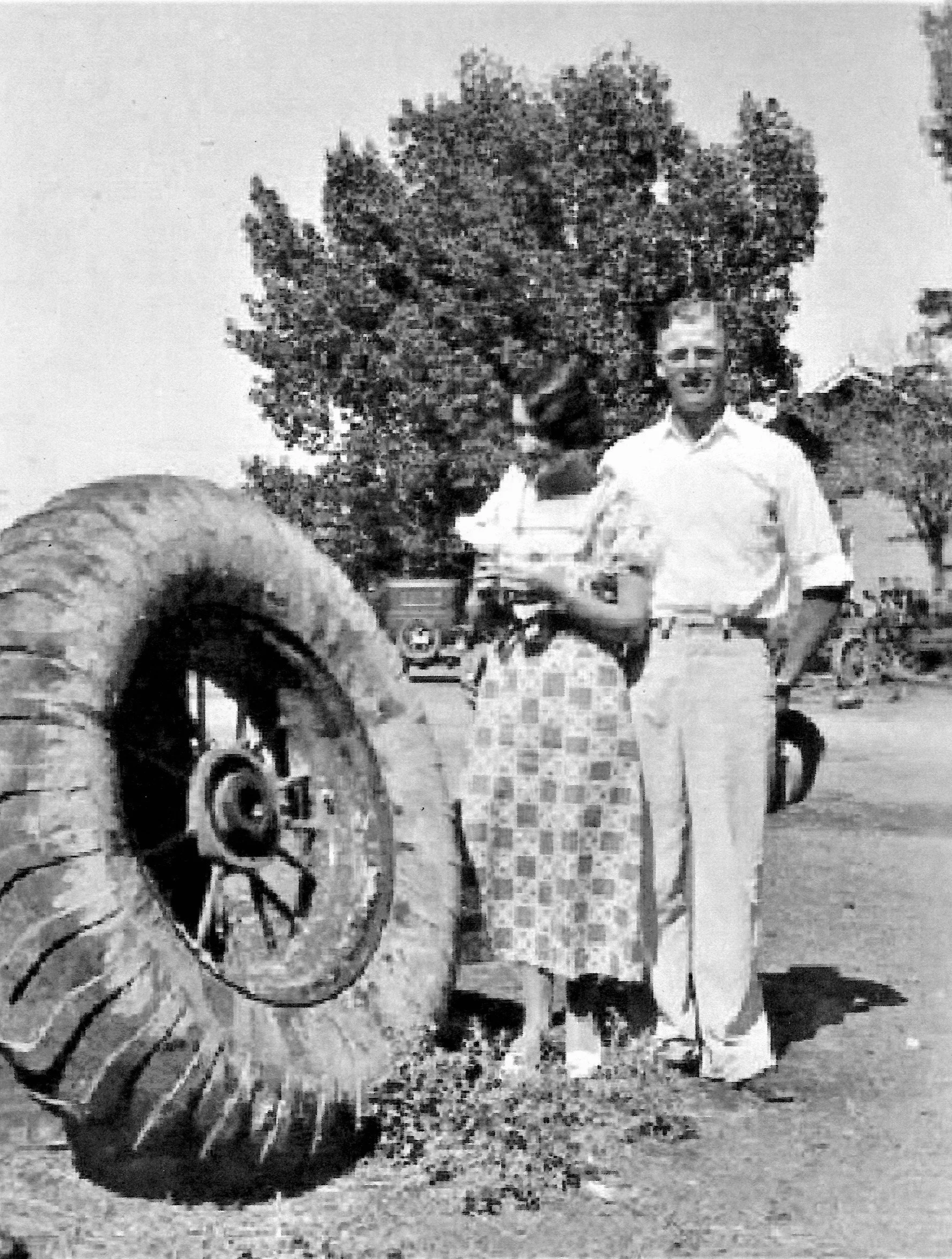
Henry and Jennie in the Schmidt Backyard.
But Henry's life wasn't all machinery and ditch banks. Not far from the farm, in South Jordan, he met Jennie May, one of twelve children from Millcreek. Jennie was very small in stature, loved to sing, and it wasn't long before Henry was smitten. The two married in 1933, when he was 27, and she was 23.
Henry and Jennie wanted to live on the farm and carry on the legacy, but the newlyweds were short on cash and materials were scarce and expensive. They lived in John and Marie's house for several years while they tore down old buildings and salvaged the lumber and brick. Finally, in the spring of 1939, their house on the south acre of the farm — on Redwood Road — was finished. The red-brick house still stands today, still occupied by Schmidt descendants.

The House Henry built for his family on Redwood Road.
World War II was just around the corner. None of the Schmidts were drafted, thanks to their role as farmers, but they still found ways to contribute. When the U.S. government bought 1,405 acres of what is now Kearns to build a military base, the dry farmland had to be cleared first — and Henry and his brothers, Paul and Frank, took the job. The $3,000 they earned, together with the salvaged crops and a good harvest at home, was finally enough to clear the $5,000 still owed on the family's property — a significant weight off everyone's shoulders.
With that, John Schmidt had fulfilled his mission and could rest easy. He passed away at his home on April 19, 1955, having been cared for by his children in his final years. The 60 acres were divided among Henry, Paul, and Frank — the sons who had worked alongside him to pay off the debt — and they continued farming it, growing beets, corn, alfalfa, and more. Now the farmland was covered in grandchildren who played and worked alongside their parents and grandparents.
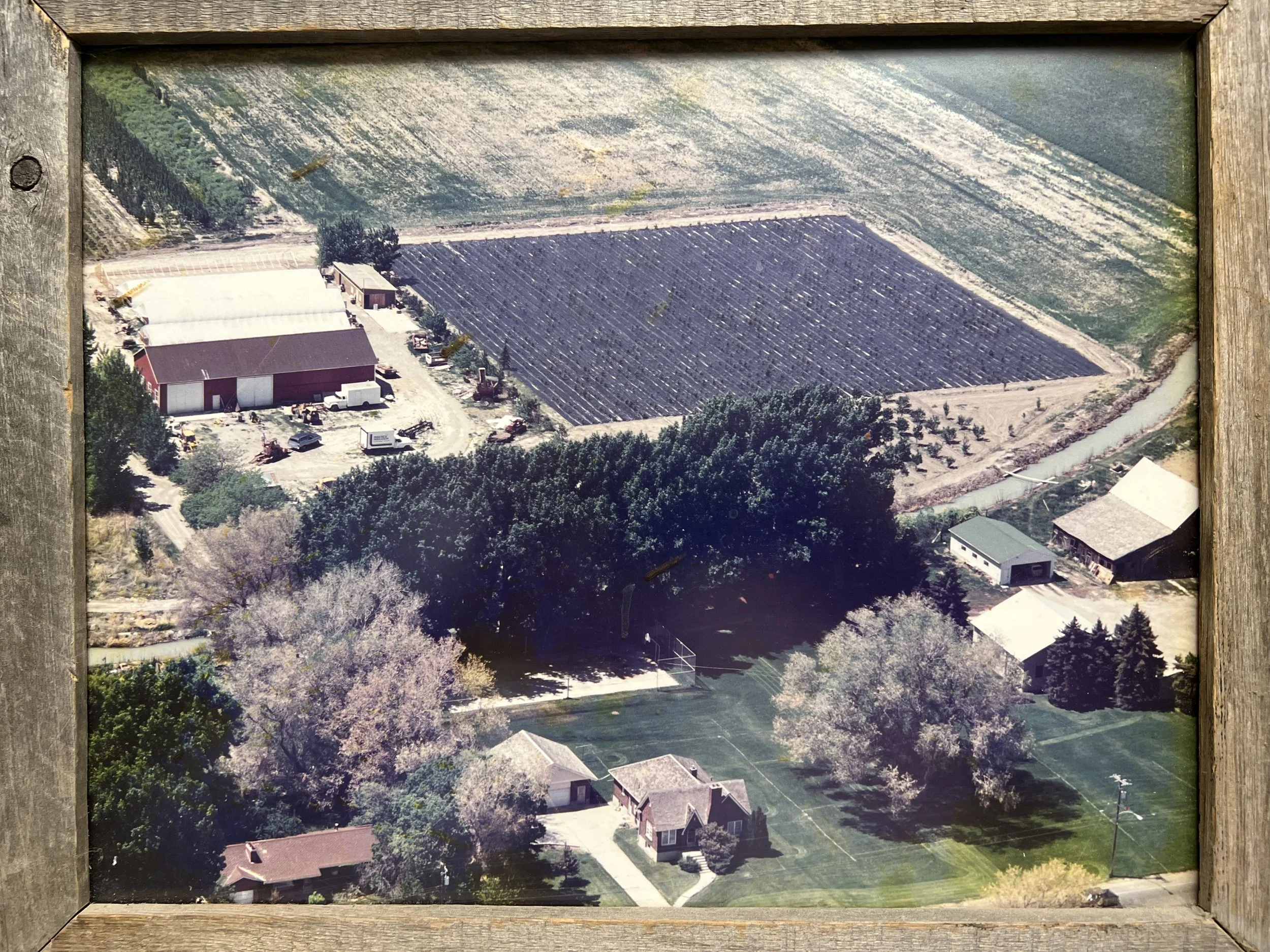
Aerial view of Henry and Jennie Schmidt's house, farm, and barns.
Henry and Jennie had six children, all raised on the farm. One daughter, Maralyn, remembers her mother serving family and neighbors warm wheat bread, chicken noodle soup, and homemade jam: "We children were given 'missions' to take food to Grandma May, Sister Richards, and Grandma and Grandpa Schmidt, all living on Redwood Road. I learned to be charitable early because of my dear mother" (Dotson, 2013). As the children grew, married, and took their own paths, only one chose farm life: Richard.
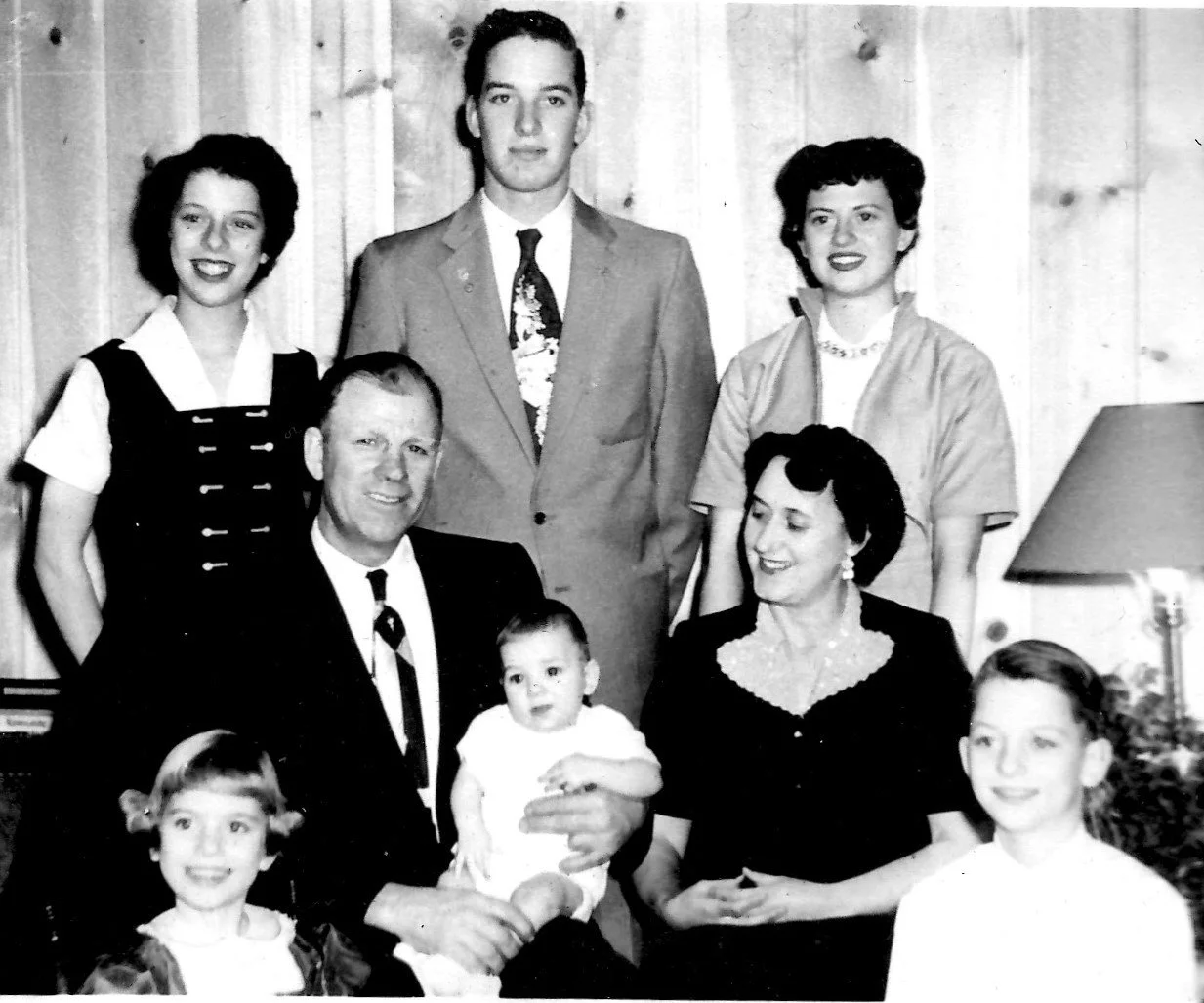
Family picture taken in 1955, Henry, Jennie, and their six children.
The Third Generation Branches Out — Richard Schmidt
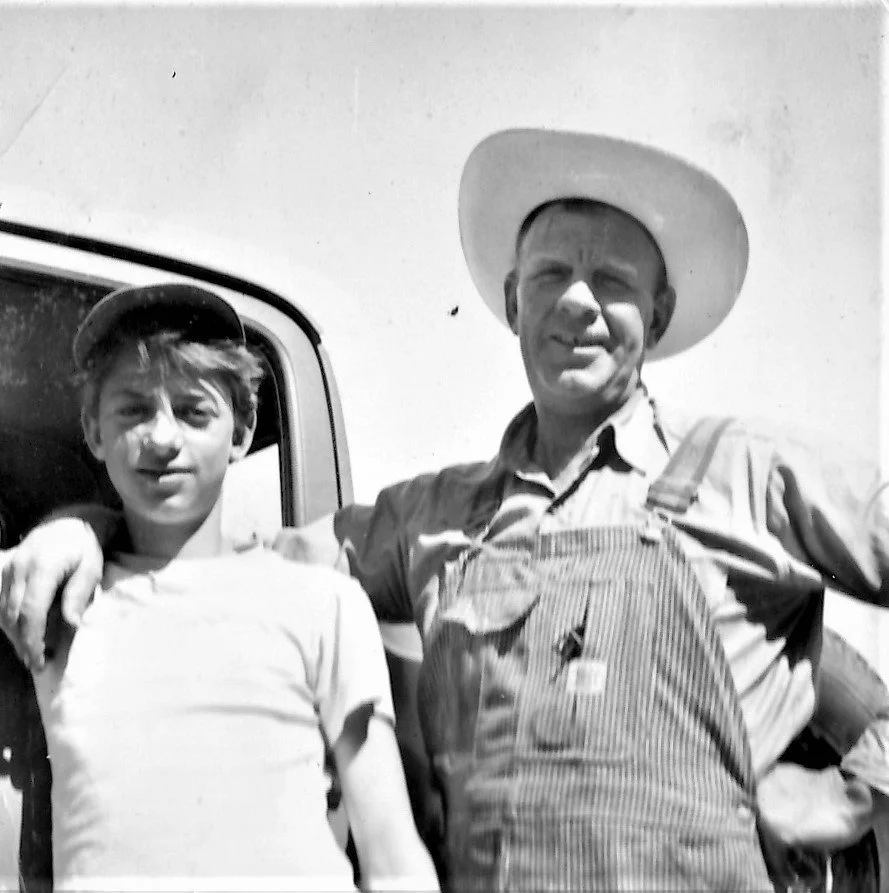
Henry and Richard Schmidt standing by the truck in May of 1960.
From his grandfather John and father Henry, Richard inherited more than farmland. He inherited their values, learning "integrity and honesty" from the two men who came before him. A hard worker and a natural peacemaker, he preferred to work behind the scenes rather than in the spotlight. But even in his youth, Richard's mind was built for business.
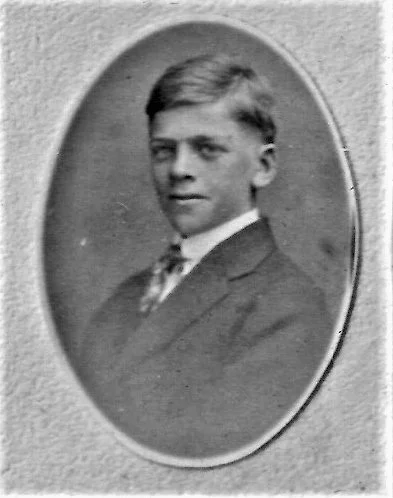
Richard’s junior high picture
His childhood chores centered on the animals, but he and his siblings soon hatched a plan to earn a little extra: a modest stand on Henry and Jennie's front lawn, selling ears of corn to passers-by. Some customers still remember buying corn from that little roadside stand on Redwood Road.

Grandpa Schmidt’s Famous “Sweet Salt and Pepper Corn”
After a few years, one of Richard's sisters, Virginia, discovered an especially delicious variety of sweet corn in New York and brought home a contact who shared some seeds. The next season was a new beginning. The corn had an incredibly sweet taste. Grandpa Schmidt nicknamed it "Salt and Pepper Corn" for its unique mix of colored kernels. People traveled from miles around to buy it each season.

Sign advertising Salt and Pepper Corn at produce stand.
As the corn's success grew, Richard expanded down the street into a larger produce stand — squashes, tomatoes, and, of course, the famous sweet corn. It thrived in the years that followed, and the family built a reputation for high-quality, fresh produce.
Richard kept running the stand through high school. Unsure what he wanted for a career, he attended BYU, explored his options, and settled on ag-business. Along the way, he fell in love with a young woman named Jo, whom he married. Life was good for the young, ambitious farmer. Then his father, Henry, was injured and could no longer farm. Richard quit school to come home and fill the gap. He had been taught to "step up and do the job that has to be done when it's time to do it" (Utah Farm Bureau Federation, 2017). Coming back, he saw his future right where he'd started: on the farm. As Henry stepped back, Richard stepped up to farm full-time, building the family's reputation for excellent produce.

Flats of vibrant petunias, perfect for landscapers.
Richard also had an idea. Flowers and seedlings could bring extra income during the farm's slower spring months. If he were to build a greenhouse, he could grow and offer those flowers that were so in demand during the Spring. So in 1988, he built a few small greenhouses. It was a success. As customers recognized the vibrant, quality, reasonably priced flowers, their demand kept growing. Every year, Richard built more and more greenhouses to keep up with demand.
At first, the flowers were sold only wholesale. After years of success, the greenhouses opened to the public in 2003, where people loved browsing the colors and varieties for their beds, baskets, and pots.

Greenhouse tables with various varieties and colors of annual flowers for sale.
The Schmidts are known not only for produce and flowers but for their u-pick pumpkin patch. Not knowing the phenomenon it would become, Richard started planting pumpkins in 1991 simply to diversify his corn field. After his pumpkins matured, Richard remembers looking over “a sea of gold” (Choate-Nielsen, 2007). Pumpkins have been a Schmidt staple ever since, drawing families to the patch and supplying hundreds of tons to local grocery stores.
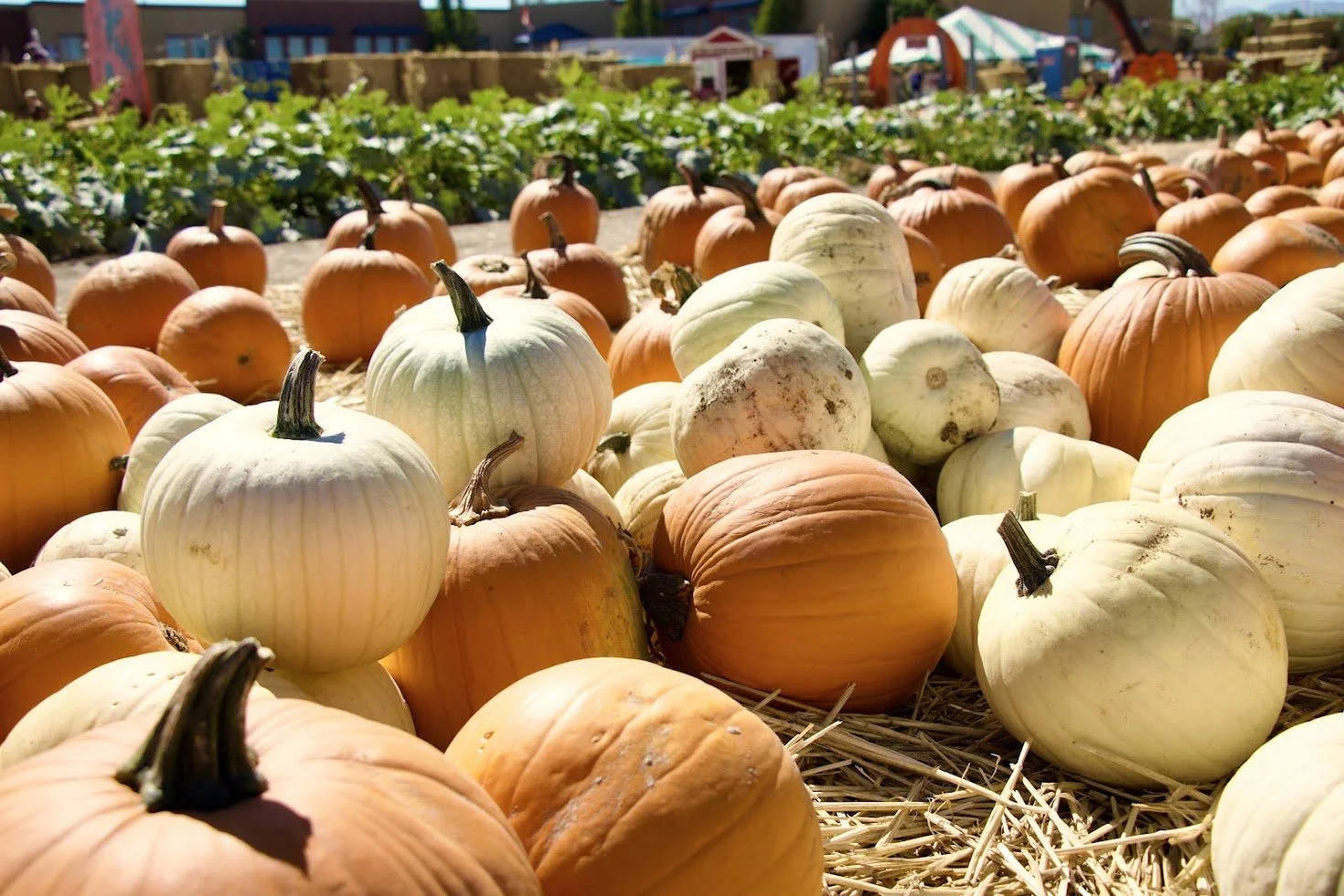
Current Pumpkin patch on the corner of 2200 West and 9000 South in West Jordan
As a deeply involved community member, Richard Schmidt served as President of the Salt Lake County Farm Bureau, an organization that advocates for agriculture. Although he pursued many different ventures throughout his life, he always came back to the farm. His work transformed a simple farm into what we know and love today as Schmidt’s Farm and Greenhouse.

Richard talks about his greenhouse and farm for the Utah Farm Bureau Agriculture's Lasting Heritage project in 2016.
A Fourth Generation Digs In — Ryan Schmidt
Ryan Schmidt, son of Richard and Jo, grew up farming in West Jordan. However, the scene in Salt Lake County had shifted dramatically since John bought the 60 acres. Streets once lined with alfalfa and wheat were now lined with buildings, retail centers, parking lots, and houses.
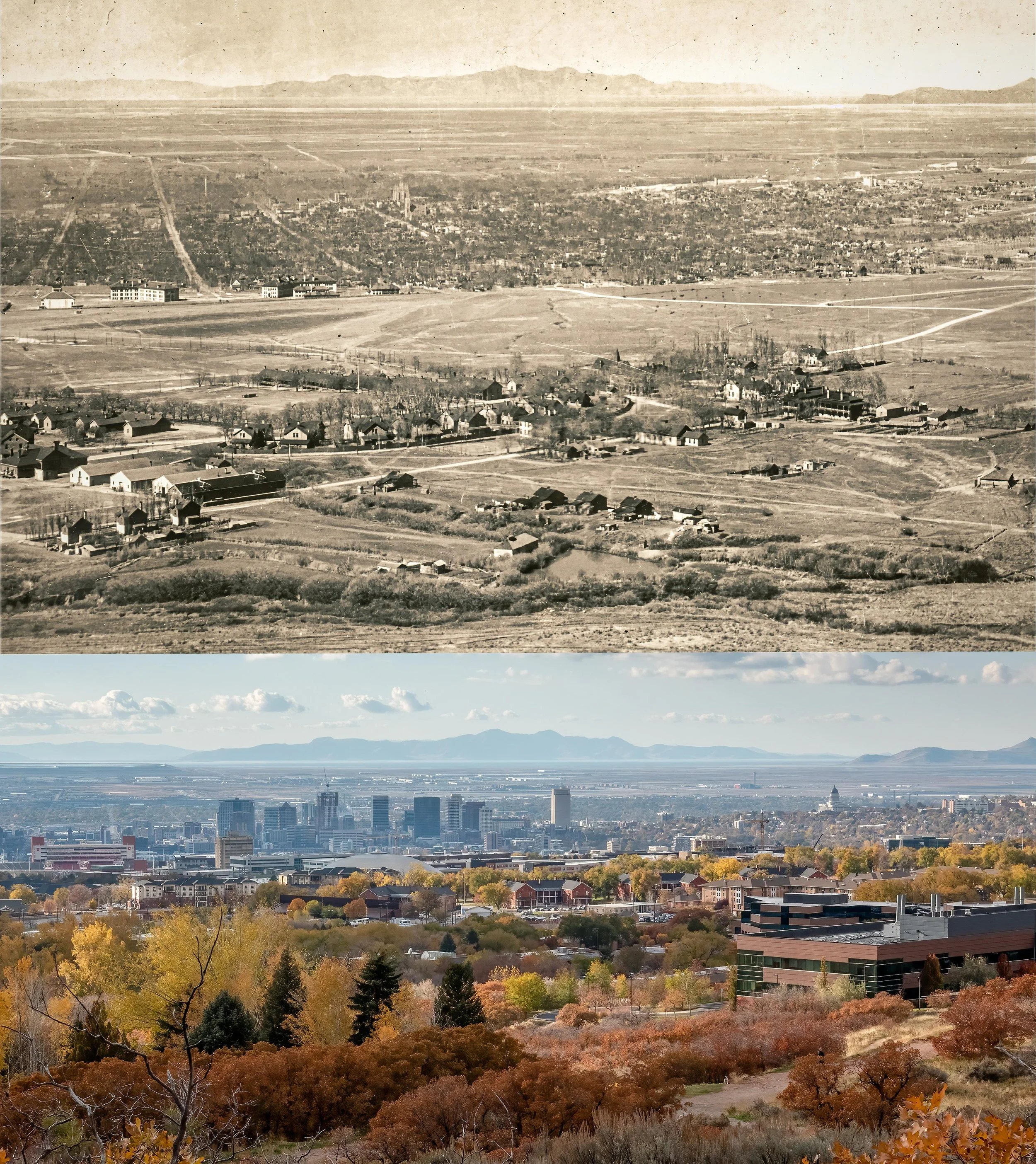
Salt Lake City around 1905 compared to modern-day.
Other farmers left Salt Lake County, calling it too developed and too urban. Ryan had other plans and worked to expand farming and greenhouse opportunities in the area.
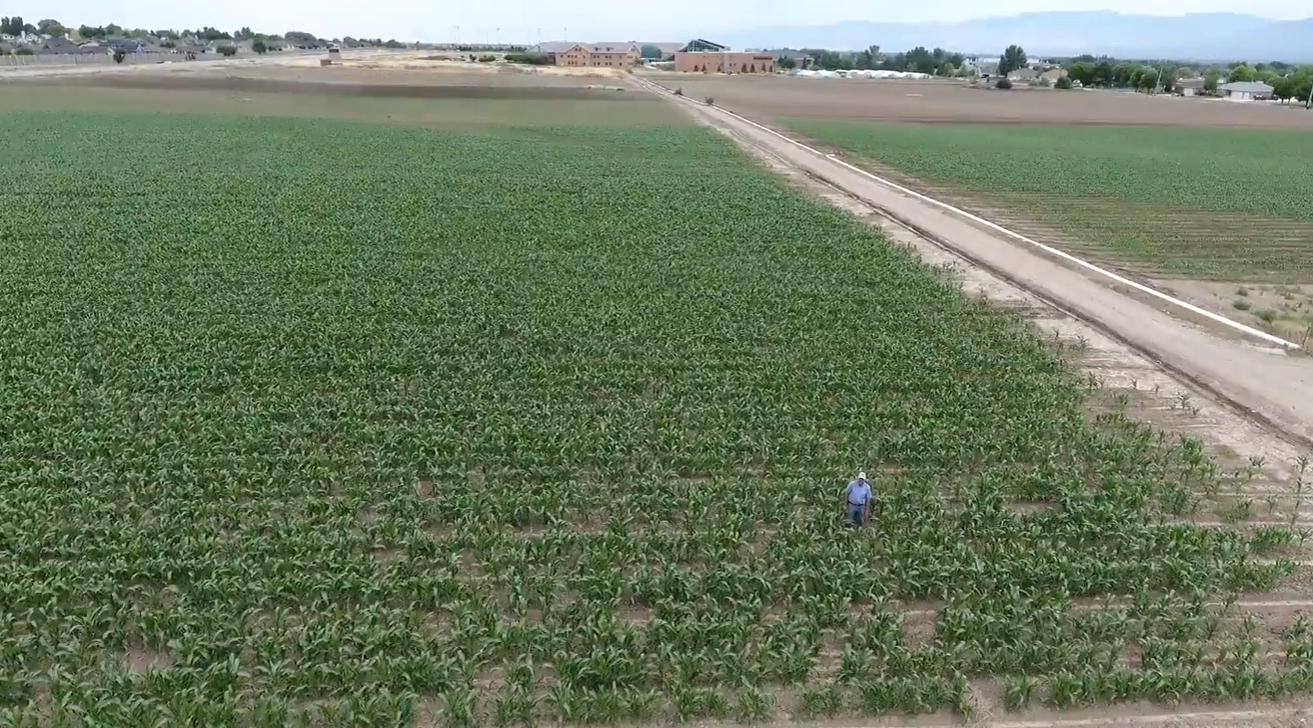
Schmidt corn field in the middle of urban Salt Lake County.
Ryan knew one thing: he wanted a career that "filled a need and was helpful, or made a difference." Everybody has to eat, he reasoned, and people are "never going to stop wanting good, quality food. If I can fulfill that need, then we all win." His research at the time revealed that the average age of farmers was 65. How could such an essential profession be so close to retirement? Ryan decided to keep farming as long as he could.
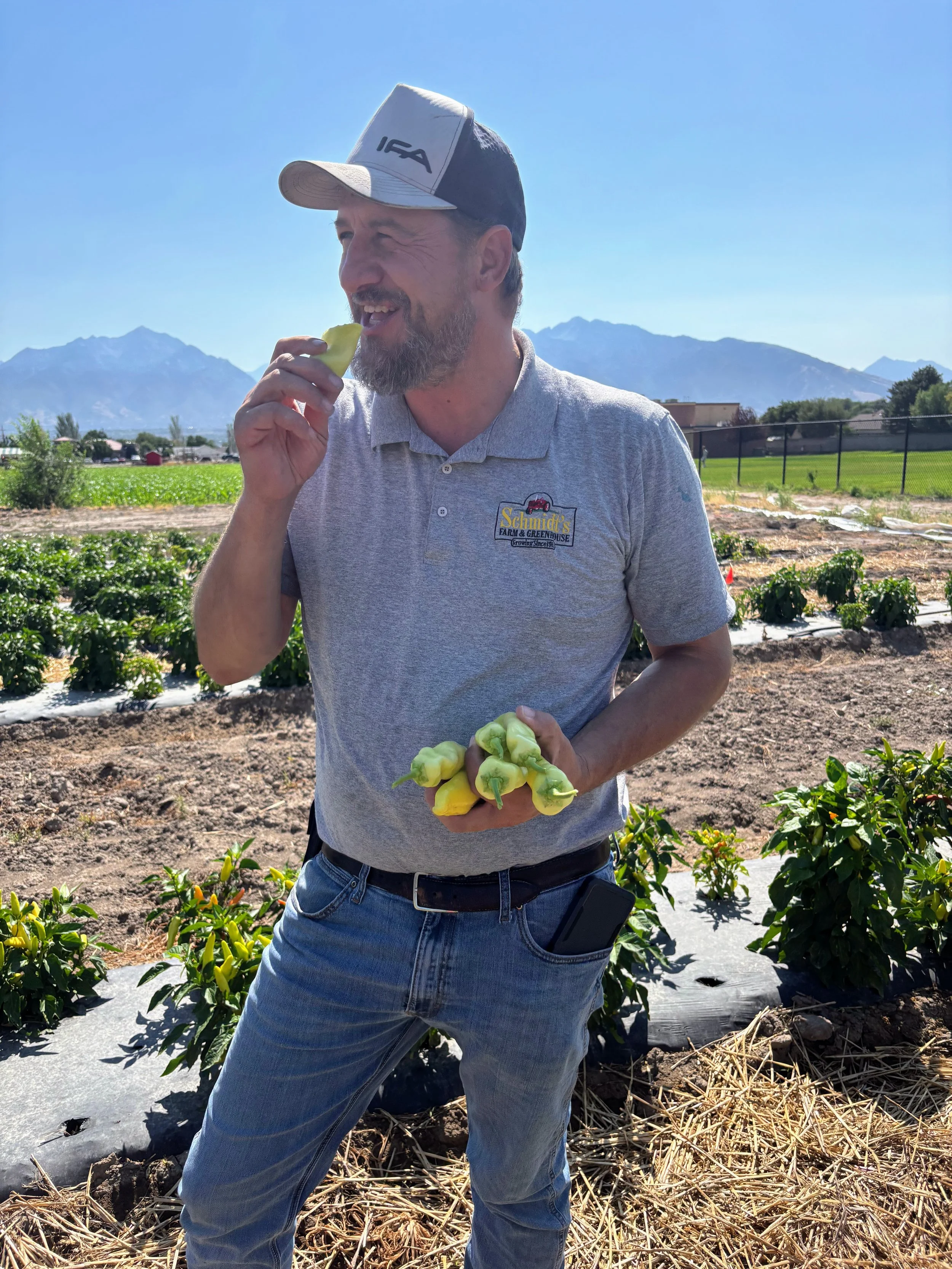
Ryan enjoying a freshly-picked wax pepper from his farm off of 90th
Working alongside his father, Ryan came on full-time in 2004. Together, they expanded the pumpkin patch and produce stand, relocated the greenhouses, and began offering a wider variety of plants. In 2021, the two began a transition: Ryan purchased the business, and Richard began stepping back.
Ryan finds fulfillment in his work. Although seeing a vibrant field of crops grow and develop is very satisfying, more than anything, he loves seeing the impact his work has on people’s lives and the community.
“Our mission is to create opportunities for people to smile. People love coming to the produce stand. They smell the corn and the watermelon, and it makes them happy.”

Ryan, Anna, and their six children enjoying the fall pumpkin patch.
Ryan and his wife Anna live in the same house Henry built from salvaged bricks with their six children. Anna and their children can often be found helping at the produce stand or pumpkin patches.
Ryan continues his family’s legacy with a strong work ethic and a deep commitment to his community. His staff describes him as a hardworking farmer and devoted family man — someone who's always ready to laugh at a good joke. He’s compassionate, especially as an employer, and goes out of his way to help his staff feel like they’re part of the Schmidt family. He’s great at seeing the potential in others and helping them grow.
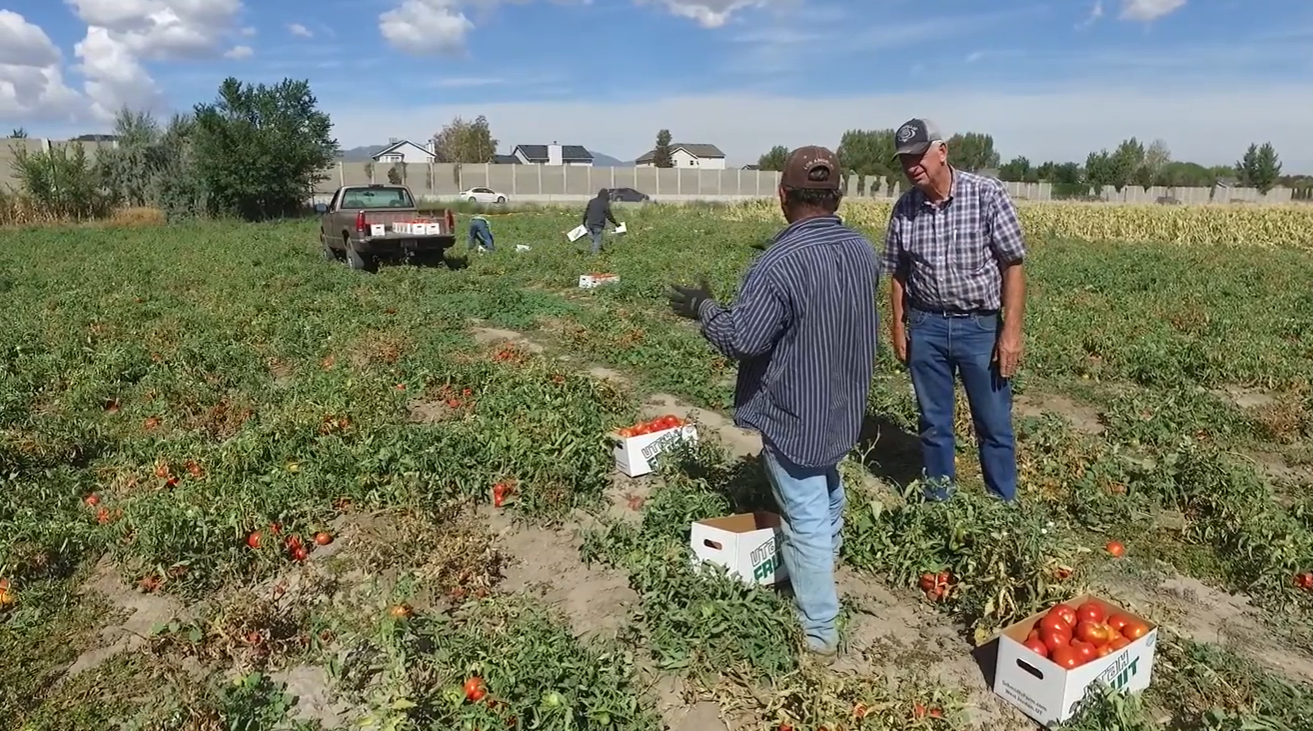
Harvesting tomatoes on a plot of land surrounded by streets, houses, and cars.
Like his father, Ryan serves as President of the Salt Lake County Farm Bureau, supporting its mission to advocate for farmers and the right to farm.
Four generations later, the mourning doves still coo over the same West Jordan soil John Schmidt once tended. The tractors have changed, the fields have shrunk against the advancing subdivisions, and John and Marie’s family has grown from six children to hundreds of grandchildren and great-grandchildren, but the values they carried across the Atlantic have never left the farm. Hard work. Resourcefulness. A stubborn refusal to give up. Ryan and Anna are now raising the fifth generation of Schmidts on this ground, and if the last century is any indication, there will be a sixth after that.

Grow with us
We’d love to see you! View our seasonal offerings online or enjoy browsing our products in person!