
Mission: Decode Your Garden
Your plants aren't being difficult. They're being specific.
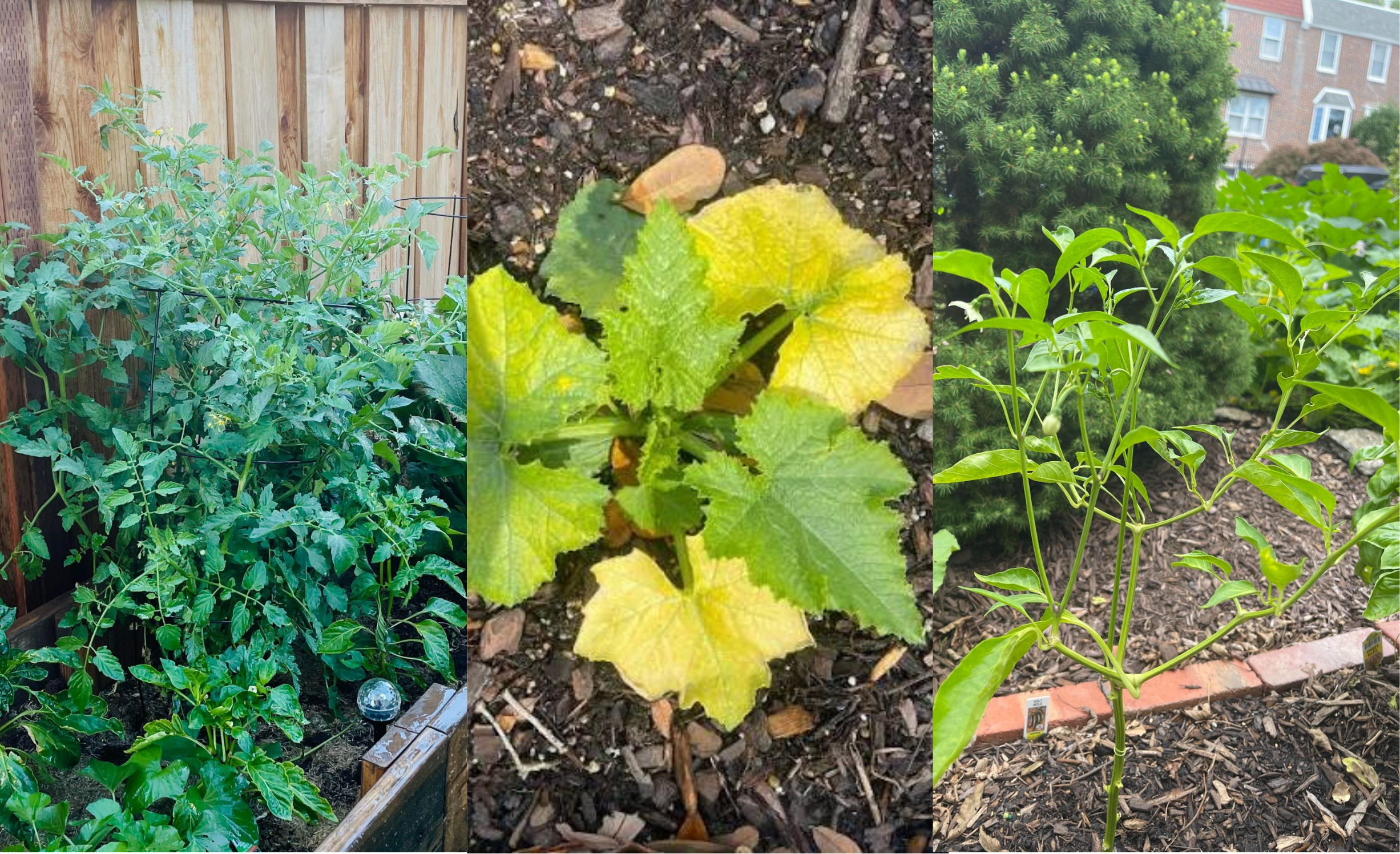
The tomato plant is enormous. Deep green. Genuinely the most impressive-looking thing in the garden.
It has not produced a single tomato.
Two rows over, the squash leaves are turning yellow from the bottom up. And the pepper plants are making peppers, technically — small, thin-walled, sad little peppers that never quite became what they were supposed to be.
Three plants. Three problems. And every one of them has been leaving evidence for weeks.
Here's the thing about a vegetable garden: it may not be able to tell you verbally what's wrong, but that doesn’t mean it isn’t calling for help. Plants show their needs in patterns, and once you know how to read those patterns, you stop labeling your thumb as black and start knowing exactly what they’re pleading for.
We've been growing in this same Utah clay since 1911. Four generations later, we've gotten pretty good at reading what plants are asking for. We'd like to teach you.
Let's work the cases.
The Evidence Board: 3 Common Vegetable Garden Problems
Scan these. At least one of them is probably in your garden right now.
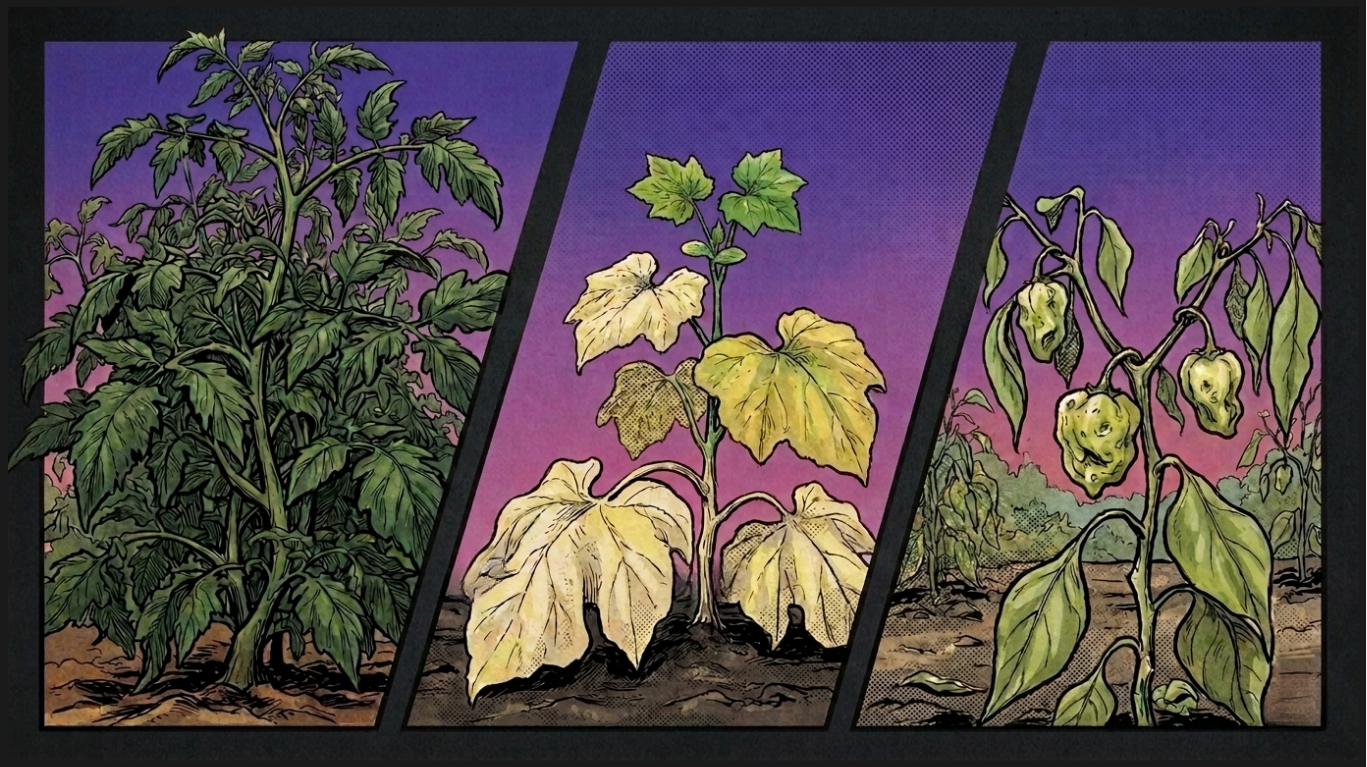
Three cases, three cries for help. Left: all leaves, no tomatoes. Center: older squash leaves fading from the bottom up. Right: peppers that never sized up.
Enormous, healthy, gorgeous plants producing little or no fruit.
Older leaves are fading to pale yellow, while the new growth on top stays green.
Fruit that shows up but underdelivers — small, thin-walled, uneven, and the plant catches every disease that comes through.
Three cases. Let's take them in order.
Case One: All Show, No Substance — Why Your Tomato Plant Isn't Producing Fruit
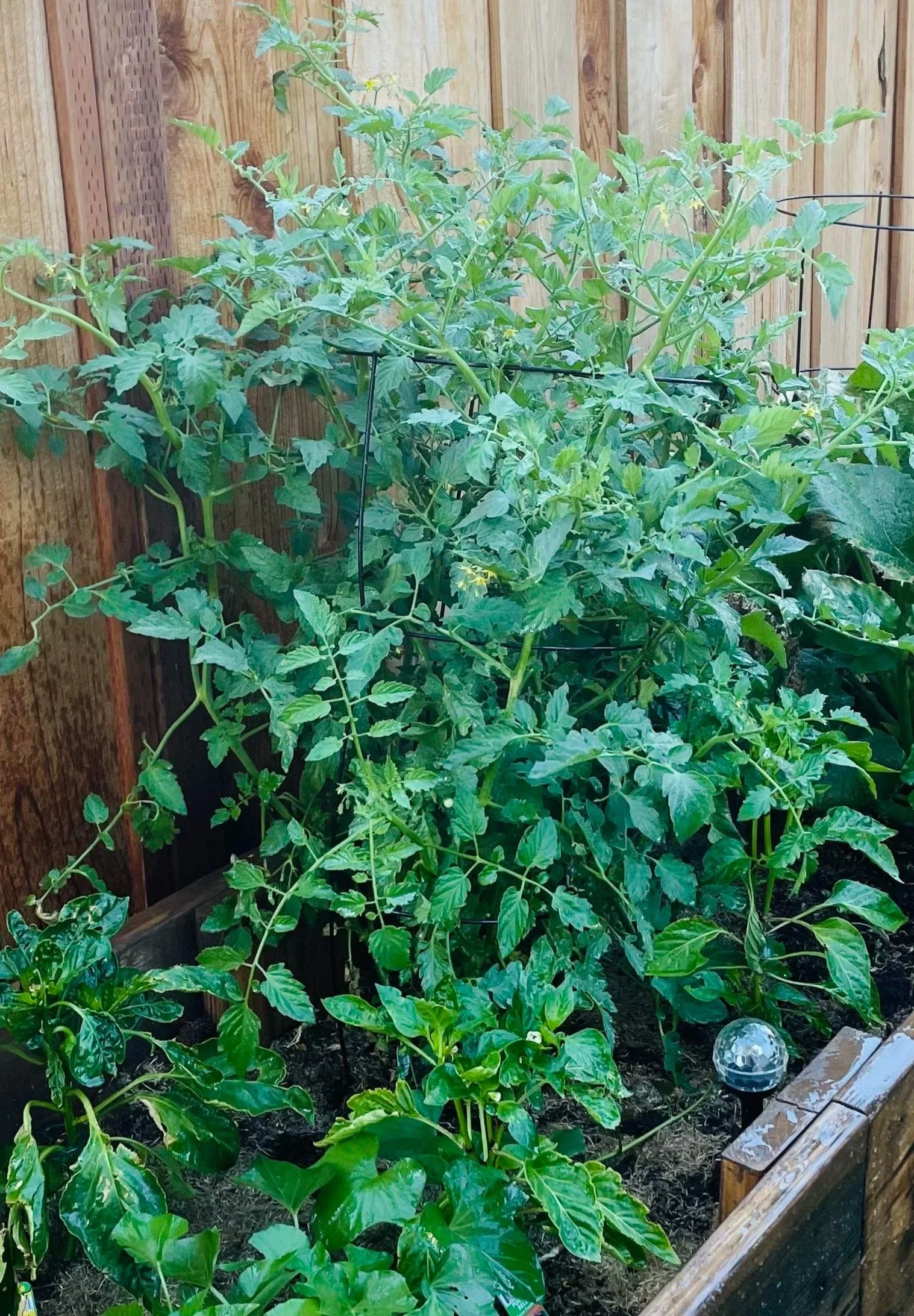
All show, no substance. Thick stems, deep green leaves, plenty of blossoms — and still almost nothing to pick.
The evidence: Back to that enormous tomato. Thick stems, deep green leaves, it looks like the definition of healthy. But flowers are scarce, and the few that appear drop off. Tomatoes aren’t happening.
The obvious suspect: The plant needs more food. It's working so hard!
What's actually happening: This plant isn't starving. It's overfed on the wrong thing. Nitrogen tells a plant to build green growth: more stems, more leaves, more green. And it will happily keep building forever if that's all you give it. Phosphorus is what drives the plant to produce roots, flowers, and fruit. If you load up on nitrogen alone, then you've built a beautiful factory that never got the order to make anything more than leaves.
This is the most common mistake in home vegetable gardening, and it comes from good intentions. All-purpose lawn-style fertilizer is nitrogen-heavy by design. Grass should just make more grass. Your tomatoes shouldn't.
The fix: Stop the nitrogen and switch to a bloom-oriented formula — the one with a bigger middle number. Cut back on any high-nitrogen feeding for the rest of the season and let the plant redirect its energy.
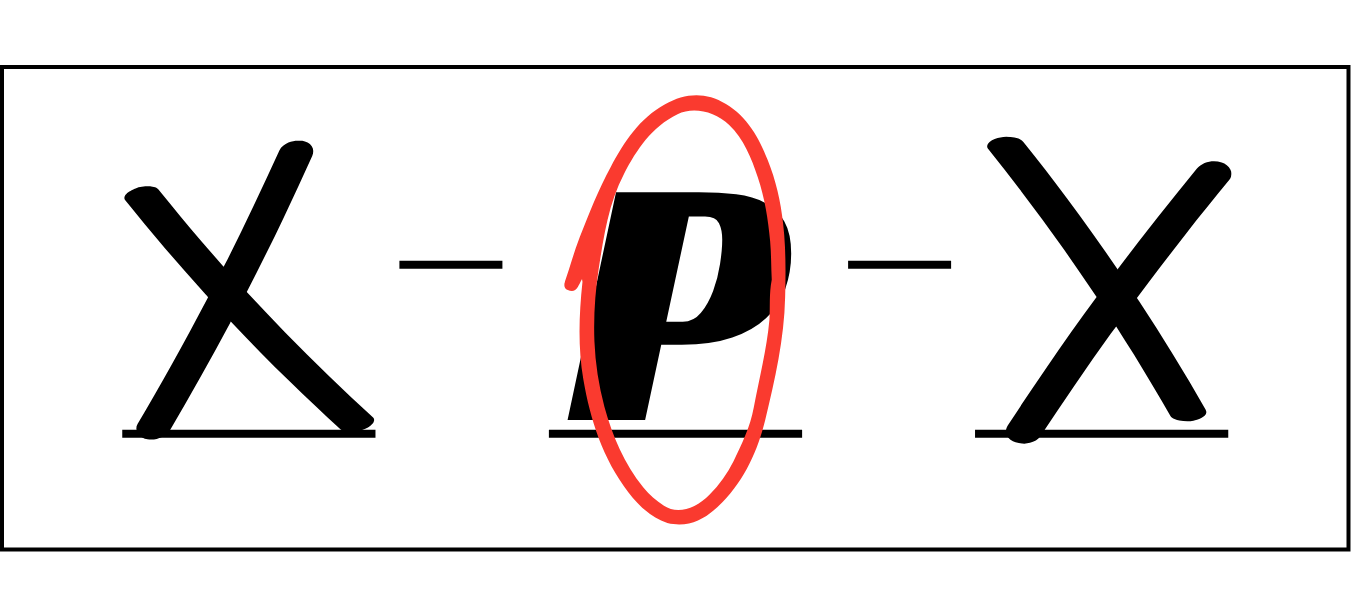
Case One, solved. The middle number is phosphorus — the one that tells a plant to stop building and start producing.
Case Two: The Fading Ones — Yellow Leaves on the Bottom of the Plant
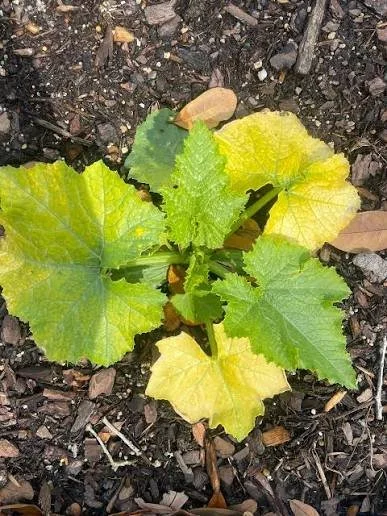
The fading ones. The oldest leaves have gone yellow all the way through, veins and all, while the new growth at the center stays green. The plant is pulling nitrogen out of its past to fund its future.
The evidence: Your squash, corn, or lettuce is losing color from the bottom of the plant upward. The oldest leaves go pale green, then yellow, then completely limp, right before they give up entirely. Meanwhile, the newest growth at the top still looks fine.
The obvious suspect: Not enough water! Disease is spreading from the bottom up!
What's actually happening: That direction — bottom first, top last — is the entire case. Nitrogen moves freely inside a plant. When there isn't enough nitrogen coming in from the soil, the plant makes a decision: it pulls nitrogen from its old leaves and sends it to the new ones. Those pale lower leaves are a plant feeding its own future by sacrificing its past.
The fix: Feed that squash plant a healthy dose of nitrogen. You’ll love how quickly it works; color often returns in a week or two. Heavy leaf producers are the usual victims: corn, squash, greens, anything you're growing for the foliage itself.
One note: If the yellowing is on the new growth up top and the leaves are yellow with green veins still showing, that's a different case entirely. Look at the bottom for field notes.
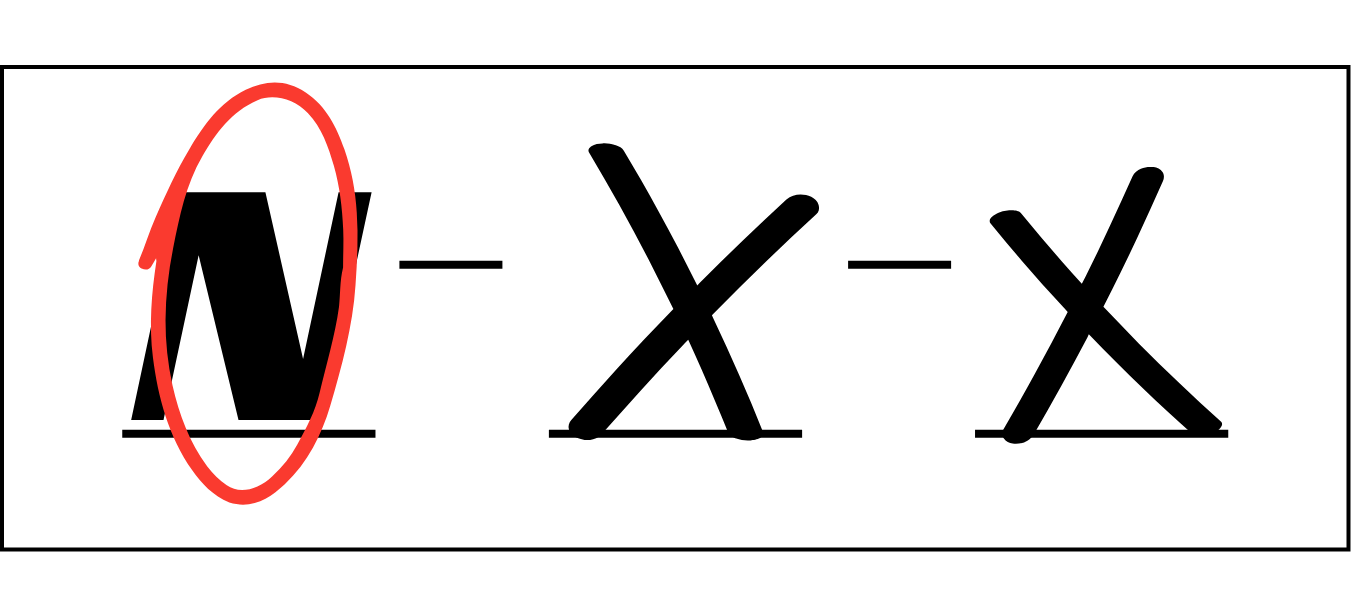
Case Two, solved. The first number is nitrogen — leaves, stems, and green growth.
Case Three: The Weak Harvest — Small Peppers and Thin-Walled Tomatoes
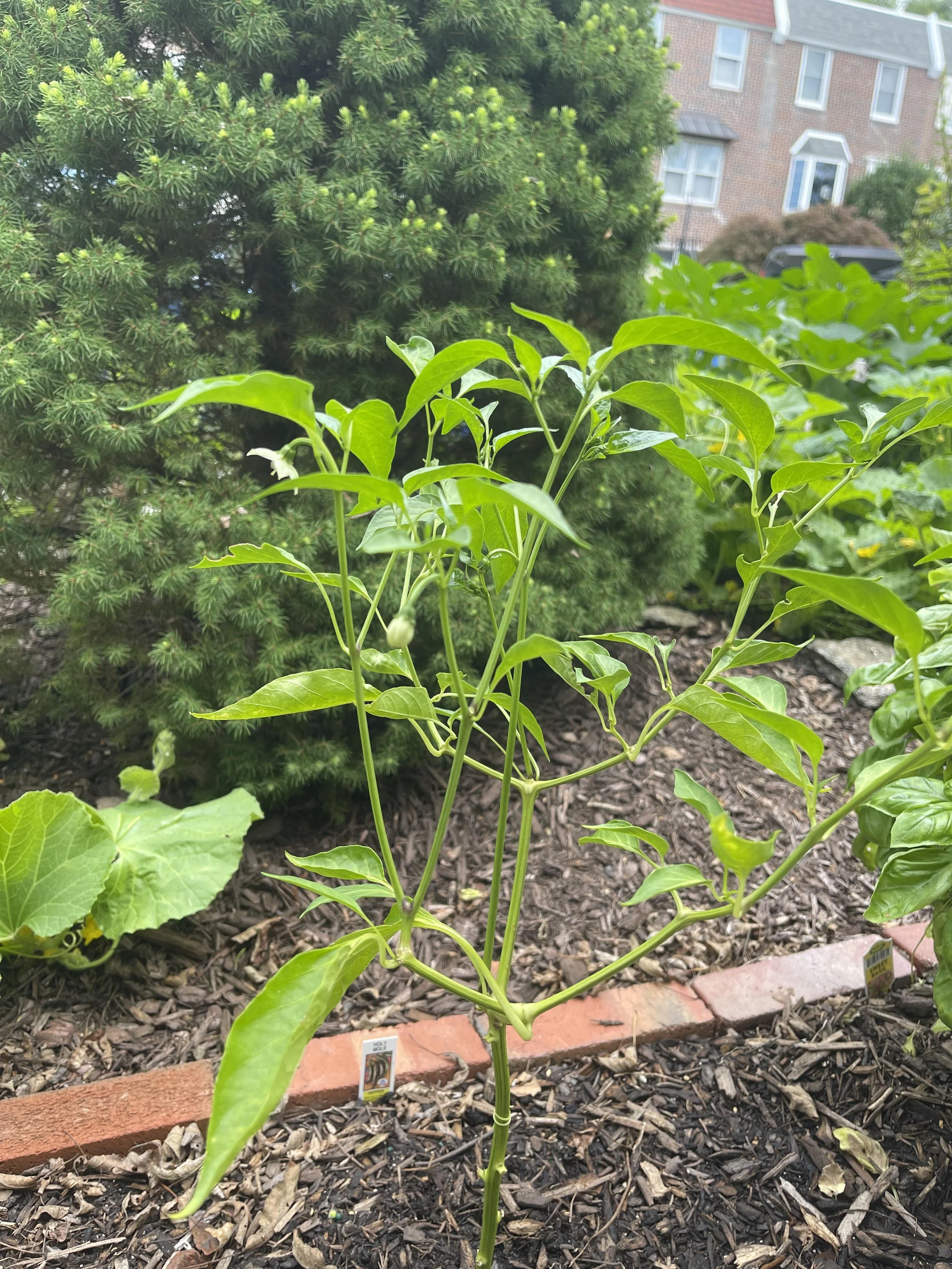
The weak harvest. This plant is trying — buds, blossoms, one small pepper — but it doesn't have what it needs to finish the job.
The evidence: Fruit sets, but it disappoints. Peppers with thin walls. Tomatoes that ripen unevenly or are blotchy. Cucumbers that taper off at the end. The plant seems fragile — first to wilt in heat, first to pick up whatever disease is going around.
The obvious suspect: Bad luck. A rough year. Maybe a bad seed packet.
What's actually happening: This is the case nobody suspects, because potassium doesn't announce itself. It isn't about growth or bloom, it's about function. Potassium regulates water movement, sugar transport, and cell wall strength. It's the difference between a plant that survives a July heat wave and one that limps through it, and between a pepper with substance and a pepper that's mostly air.
Almost nobody thinks to add it, which is exactly why it's so often the answer.
The fix: A balanced or potassium-forward feed once fruiting is underway. This is a mid-to-late-season case; it shows up right when your plants are working hardest.
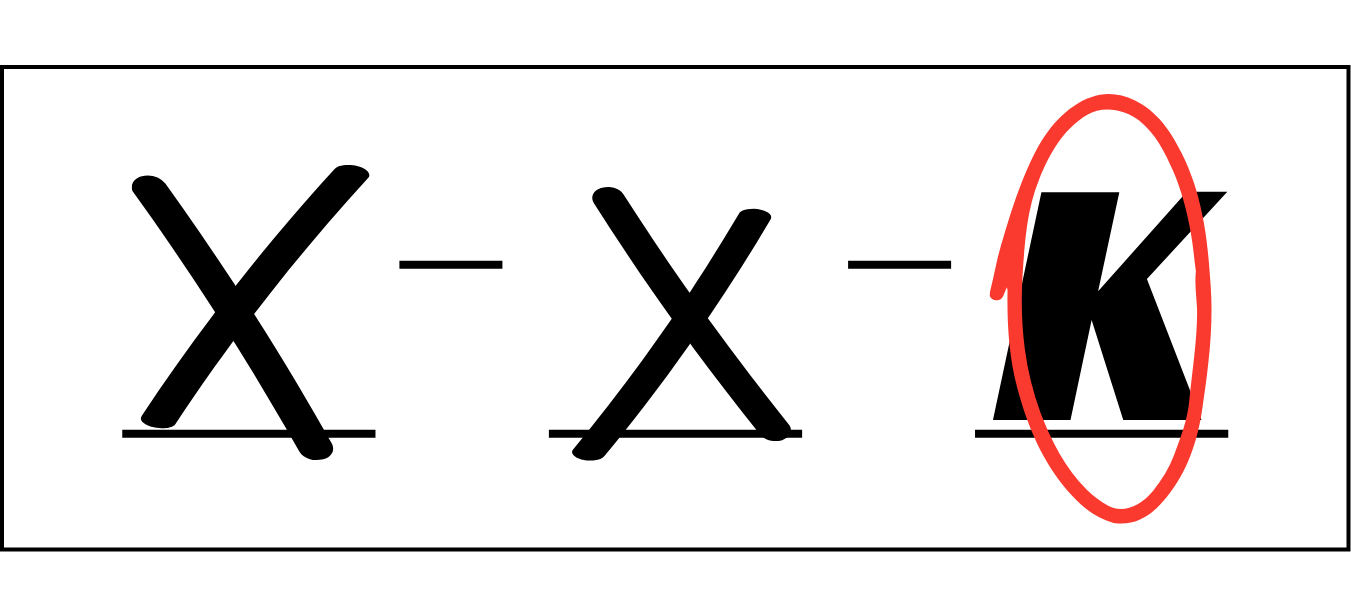
Case Three, solved. The last number is potassium — strength, resilience, and fruit that actually finishes.
The Decoder: What the Three Numbers on Fertilizer Mean
Three numbers on every bag. You've just solved all three of them.
N — Nitrogen. Leaves and green growth. Case Two.
P — Phosphorus. Roots, flowers, fruit. Case One.
K — Potassium. Strength, resilience, quality. Case Three.
Up, down, and all around: the top of the plant, the bottom of the plant, and everything in between. A high first number is a leaf fertilizer. A high middle number is a bloom fertilizer. A high last number is an insurance policy.
That's it. That's the whole code.
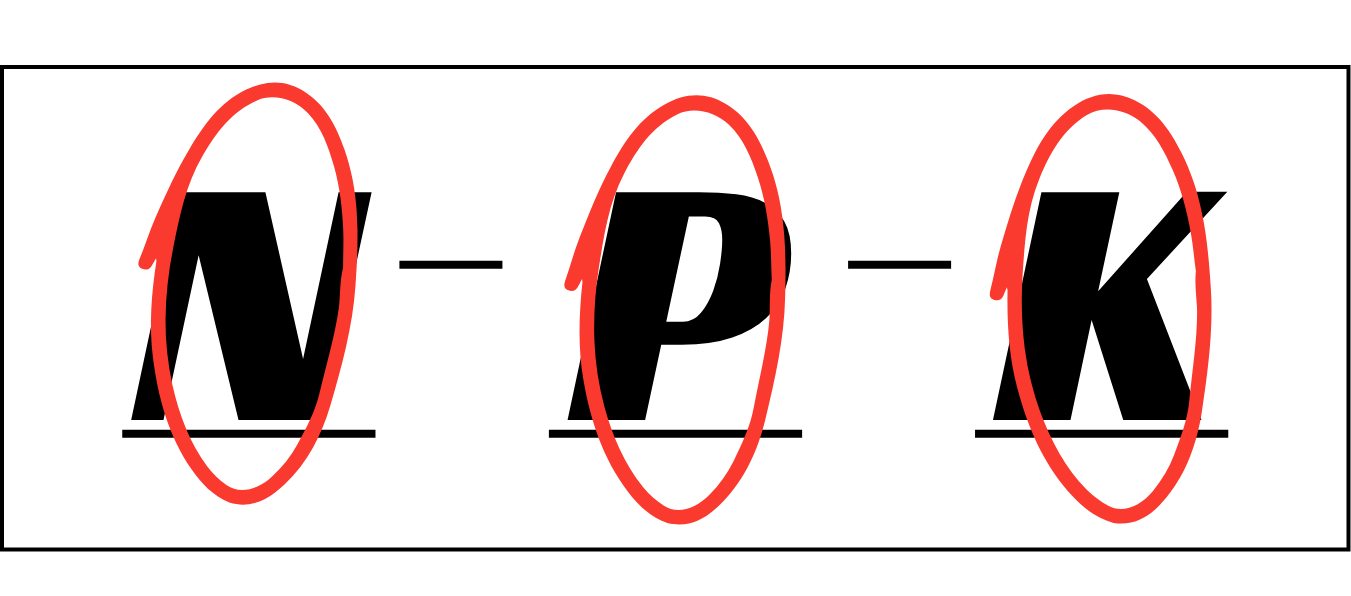
N-P-K. Three numbers, three cases, one code — and you just cracked all of it.
Field Notes for Utah Gardens: Alkaline Soil and Iron Chlorosis
Yellow leaves with green veins, on new growth. This is iron chlorosis, and it's very common in Utah. What makes this so challenging is that your soil almost certainly contains plenty of iron. However, because our soil is alkaline and heavy with clay, the iron binds to the soil in a form the roots can't take up. The plant is starving in a full pantry. Just adding more standard iron won’t fix it; however, a chelated iron product will. Ultimately, improving your soil with organic matter is the best thing you can do for the long run.
Not every case is a fertilizer case. As you know, plants can call out for help for several non-fertilizer-related reasons. Watering needs, diseases, pests, or other factors can make diagnosis tricky. We’re always happy to help you discover what your plants are struggling with! Send us pictures via Facebook or Instagram, or bring them to the greenhouse, and let’s chat!
Don’t want to guess? A soil test is the single best move you can make to know with certainty what nutrients your soil may be lacking, and it costs less than most people expect. Utah State University Extension runs one, and it’s worth looking into!
Your Assignment: Choosing the Right Fertilizer
Walk the garden this week and take a look. Underperforming plants? Yellow leaves? Struggling with produce production?
Check what you've been feeding. If it's a lawn-type product, you've been running high nitrogen. That's Case One waiting to happen. Your best bet is probably a balanced fertilizer, such as a 20-20-20.
Come pick up your fertilizer. We’re open Monday through Saturday. Come by so we can help you find the fertilizer your plants are begging for!
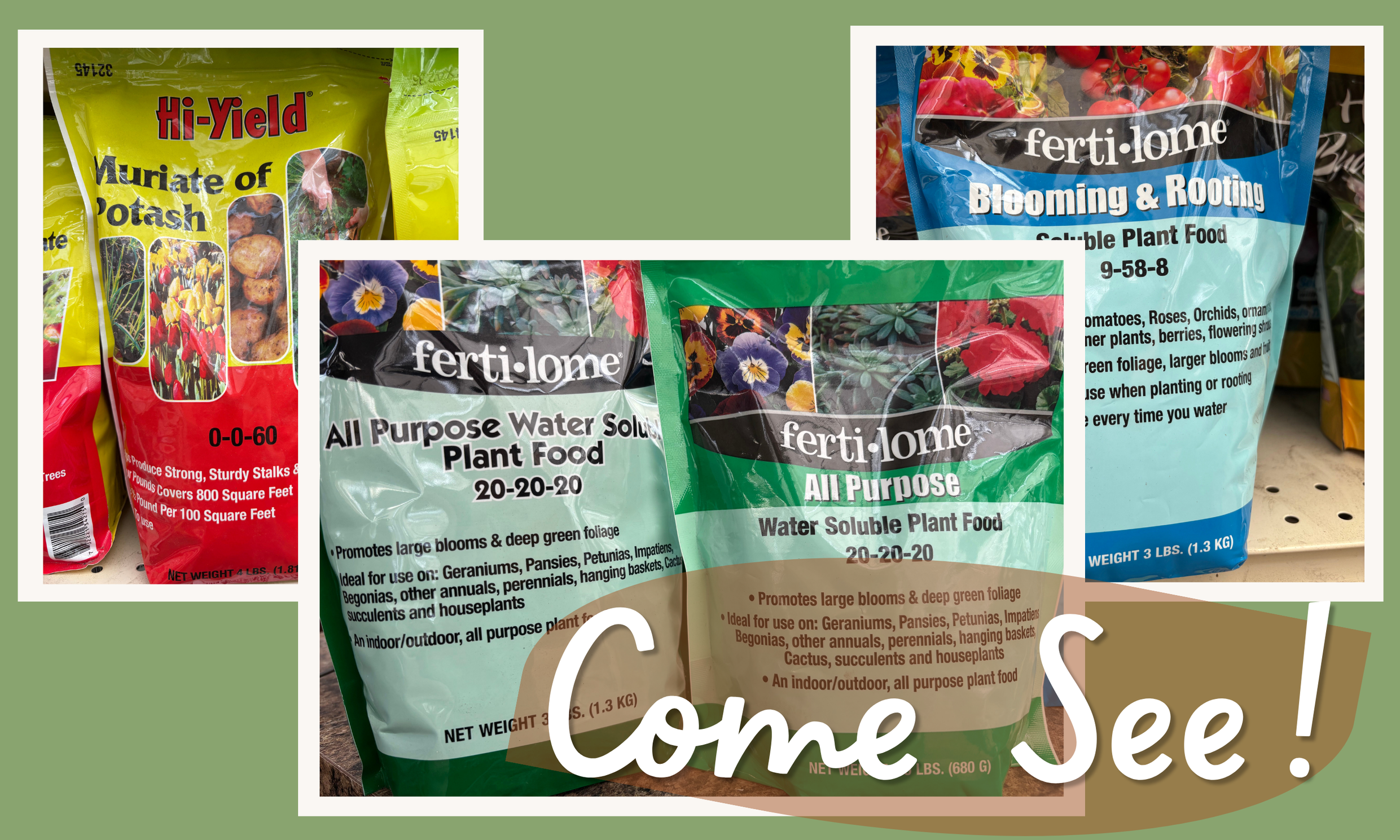
We've got all three numbers covered. Bring us your case — a photo, a leaf, or just a description — and we'll help you match the bag to the problem.
Your plants have been trying to talk to you all summer. Now you can decode their messages and understand them.
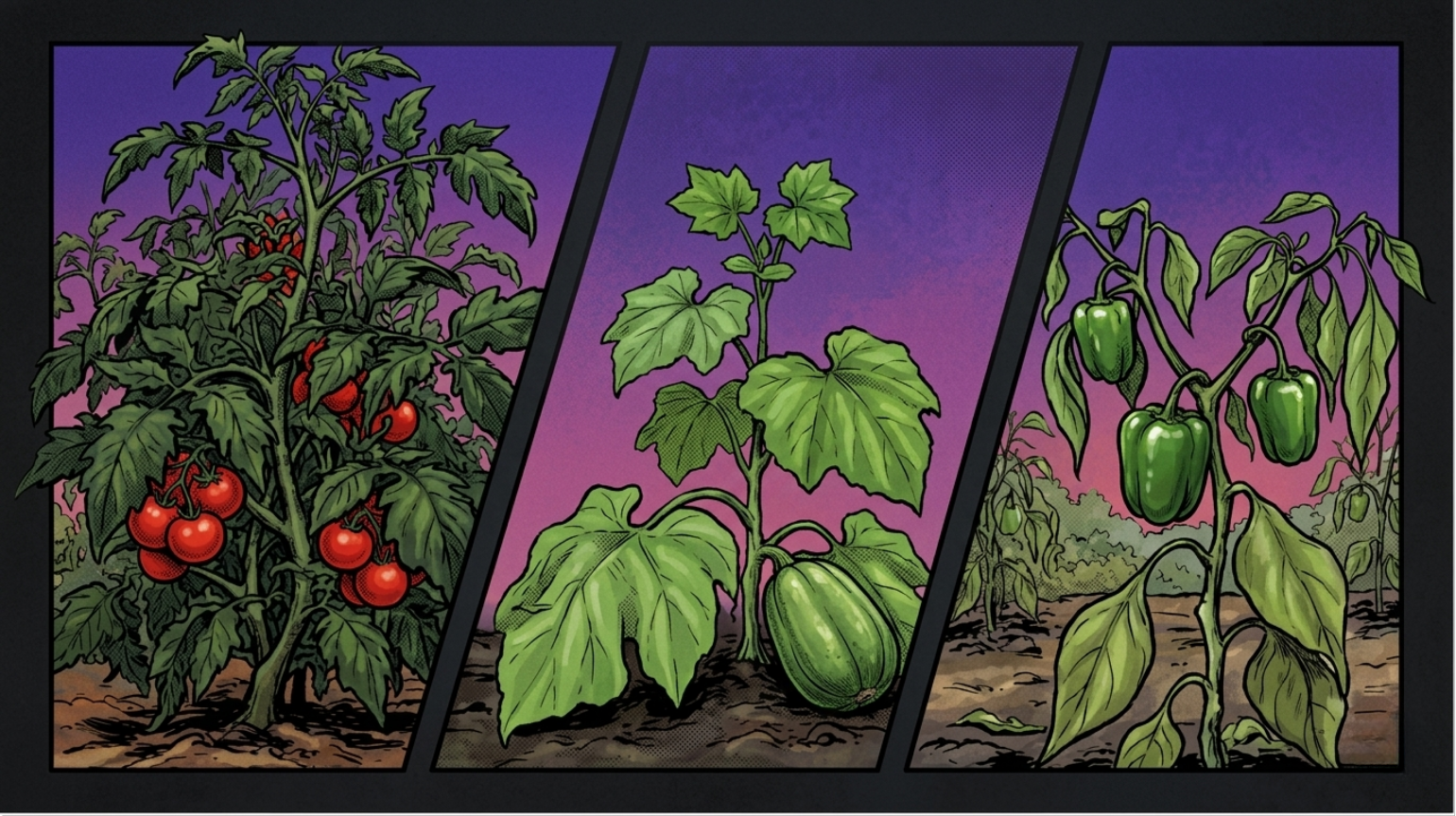
Case closed. Same three plants, properly fed. This is what your garden has been asking for.